Do you remember when you first heard about Crimea?
Maybe in a history class when you studied the famous Yalta Treaty of 1945. That’s the one where Britain’s Churchill, America’s F.D. Roosevelt, and Soviet Stalin carved up Europe into its post-war version that today pulses with grievances of dissent.
Maybe it was when Russia invaded, then claimed, Crimea in 2014?
Or maybe your first awareness came in 2022, or 2023, or in 2025 when your news feed informed about explosions on the strategic Crimea Bridge that links Crimea to Russia.
Although his birthplace is a beautiful and green city in southern Ukraine [under Russian occupation since the beginning of the full-scale invasion in 2022], home is where Ruslan Kurt’s roots are: Crimea. Ruslan’s father is Crimean Tatar and his mother is Ukrainian with Crimean Tatar roots. Through his childhood and youth, Ruslan often visited Crimea and even stayed to live there for a time.
After the 2014 Russian occupation of Crimea, Ruslan left his homeland. He spent six years in Qatar, and now lives in Toronto, Canada.
Ruslan Kurt identifies as a Crimean-Ukrainian activist artist. He has known Crimea his whole life and has many stories to tell about Crimea, about its people, and about Ukraine.
His family history represents but one snapshot of historical attempts to wipe out the Crimean Tatars.
He told us, “My grandparents lived there until 1944, when the Soviet authorities carried out the mass deportation of the entire Crimean Tatar people. Nearly 200,000 Crimean Tatars were forced from their homes in just a few days, loaded into cattle trains and sent to distant parts of Central Asia. Tens of thousands died during the journey or in the first years of exile due to hunger, disease, and brutal conditions.”
“After the deportation, Crimean Tatars were officially banned from returning to their homeland for decades. Those who tried faced restrictions, surveillance, and systematic discrimination. Soviet authorities deliberately created obstacles to prevent Crimean Tatars from resettling in Crimea; for example, they were denied residency permits, housing, and jobs. My grandparents, like many others, could not return to their native land. Instead, they settled not far from Crimea, in southern Ukraine.”

As we have been reminded since Russia’s full-scale invasion of Ukraine, there is a pervasive historical pattern of Russian and Soviet deportations, exile, slavery, russification (particularly of children), and elimination of citizens from neighbouring countries, all along Europe’s eastern borders. A centuries old project once again revived in the 21st Century with Russia’s invasion; first, of Crimea in 2014, and more recently of Ukraine in 2022.
Many present-day historians and military experts have noted that we are in a repeat phase of Russian designs to expand the empire and to eliminate those who are not Russian.
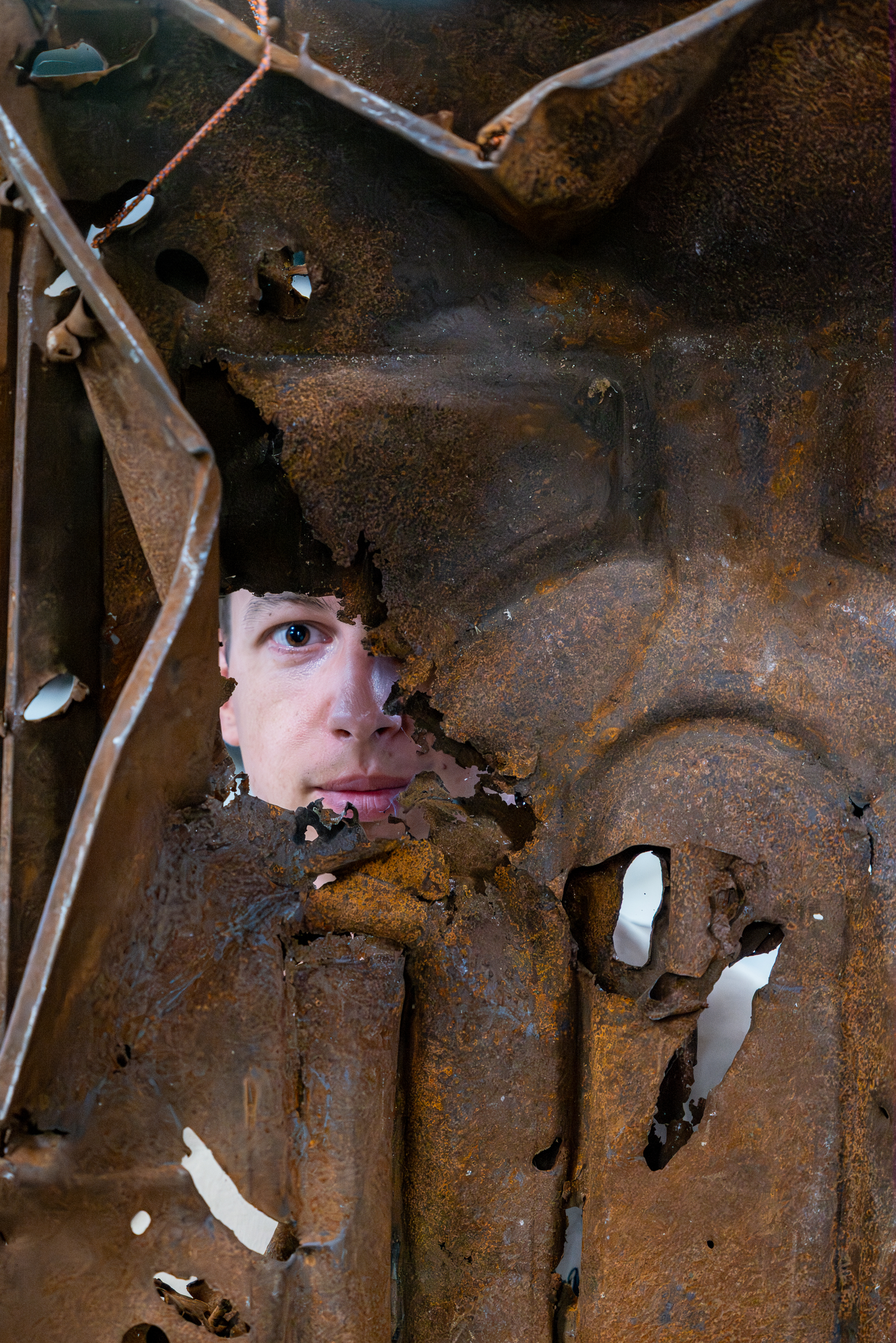
Although Ruslan is no longer living in Ukraine, Ukraine has never left him. Shortly after the 2022 full-scale invasion of Ukraine, he undertook a project, “working with Ukrainian photographers who captured destroyed doors across Ukraine (house doors, school doors, hospital entrances, etc.) – objects that once stood for safety and welcome, now fractured and silent. Along with the Canadian Association of Crimean Tatars, we printed these images life-size and first displayed them on Ukrainian Independence Day in Centennial Park, Toronto.”
“Soon after, with support from the Bloor West Village Toronto Ukrainian Festival, we transported actual doors damaged in war zones from Ukraine to Canada. They bear bullet holes, shrapnel damage, burn marks, and many still carry the smell of smoke and war.”
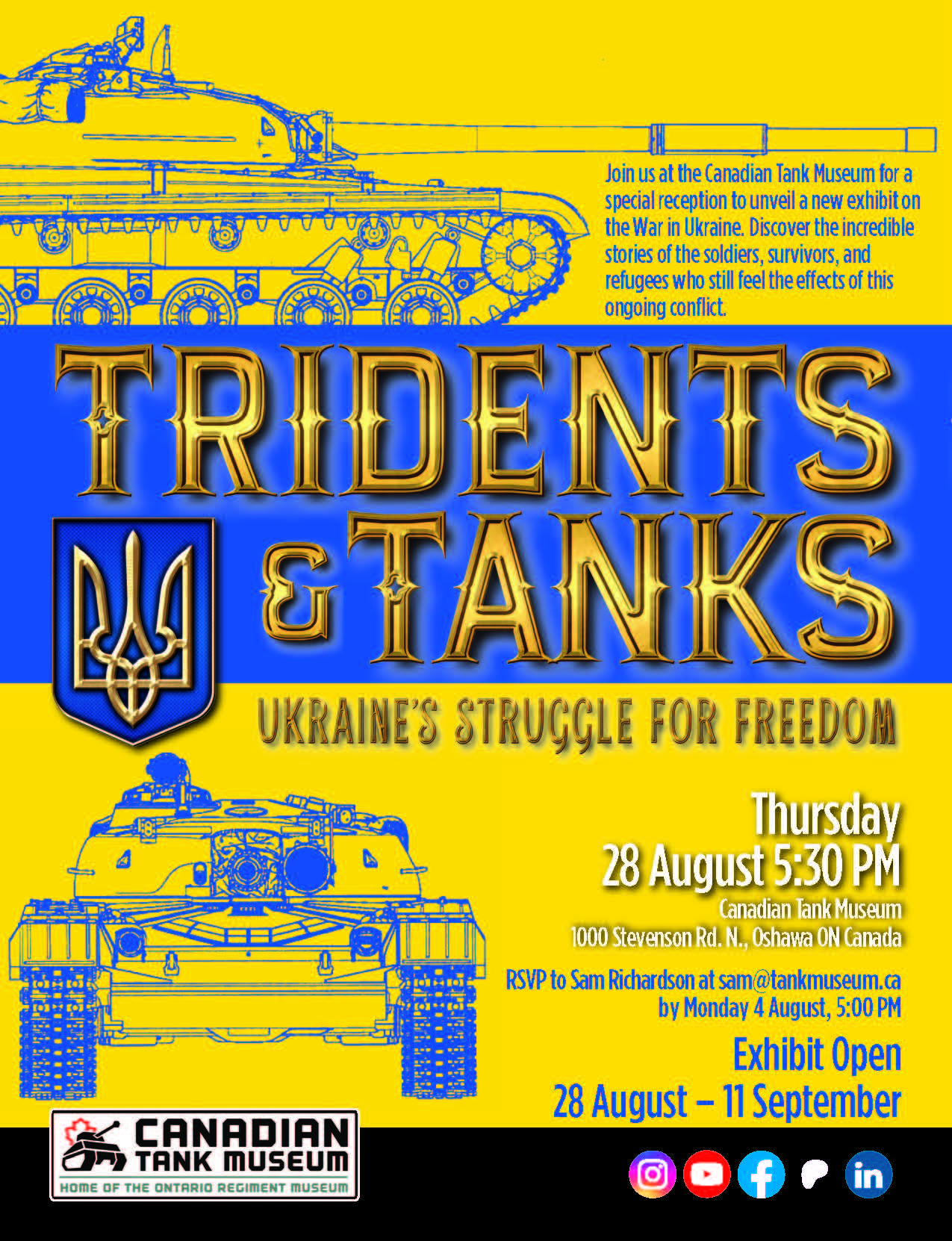
It was Jurij Klufas, Chair of the Bloor West Village Ukrainian Festival, who connected Ruslan with The Canadian Tank Museum (Oshawa, Ontario) where his poignant installation, “Doors Through the Horrors of War”, exhibited this past summer as part of “Tridents and Tanks: Ukraine’s Struggle for Freedom”.
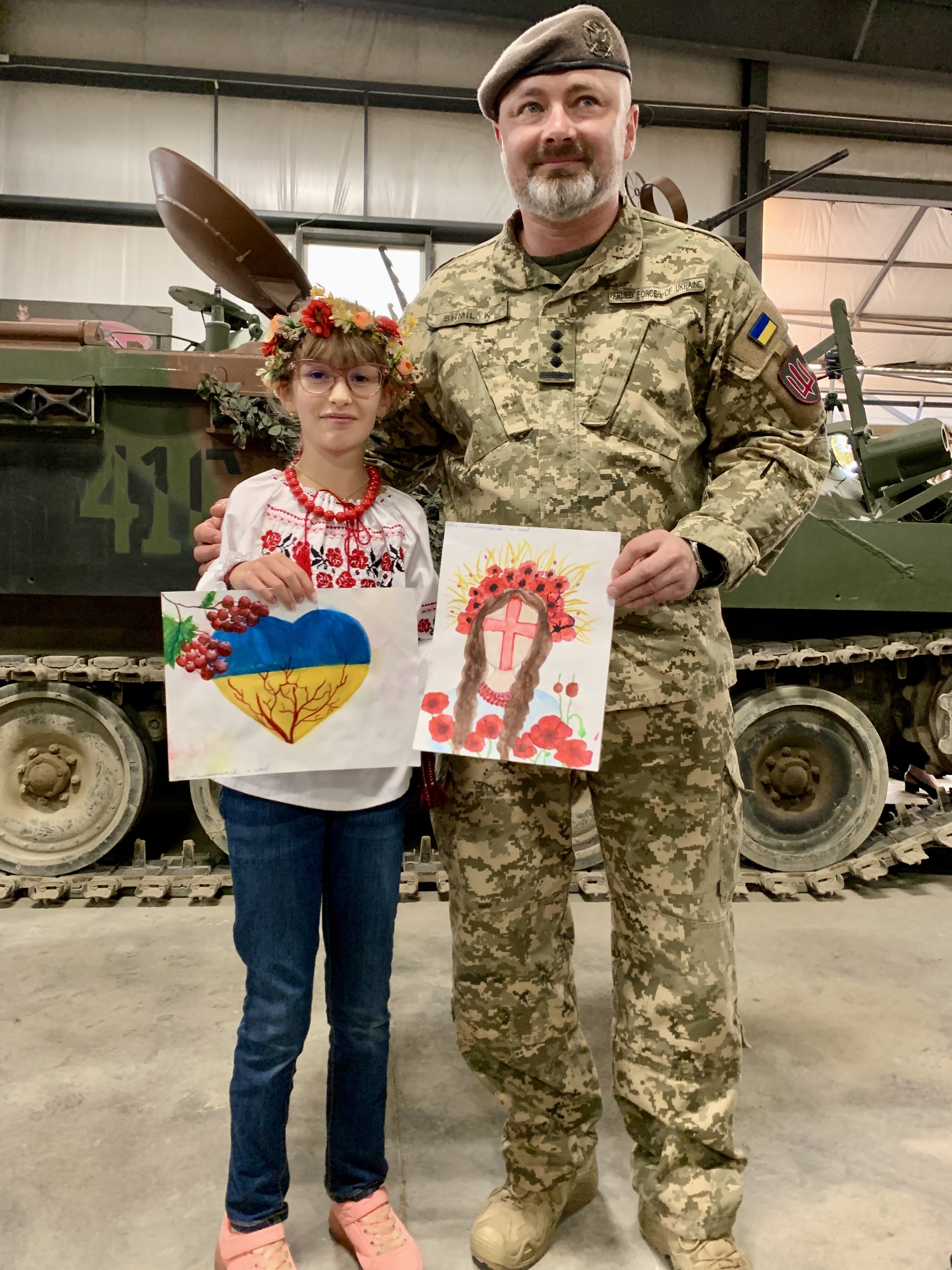
Since 2022, Ruslan’s “Doors through the Horrors of War” installation has exhibited in twenty venues across Canada; in Alberta, Ontario, Quebec, and Saskatchewan. Altogether, there are 25 doors, with the Ukrainian Museum of Canada in Saskatoon, Saskatchewan their permanent home.
When asked why he thinks Canadians are interested in his installation, about which there also is the documentary, “Doors of War”, Ruslan offered that “it shifts the war from abstract headlines into deeply human, relatable reality. Every viewer recognizes doors; they evoke homes, safety, and daily life. Seeing them destroyed, you feel the universal vulnerability of ordinary life under siege. Canadians, who cherish democracy and human rights, connect with that message fervently.”
Moreover, he expanded, “These artifacts and accompanying photos animate stories of countless Ukrainians forced to flee or who tragically did not make it through their door. Doors become metaphors for life, death, courage, and the price of freedom.”
Ruslan has observed how children who visit his installations with their parents respond to the doors.
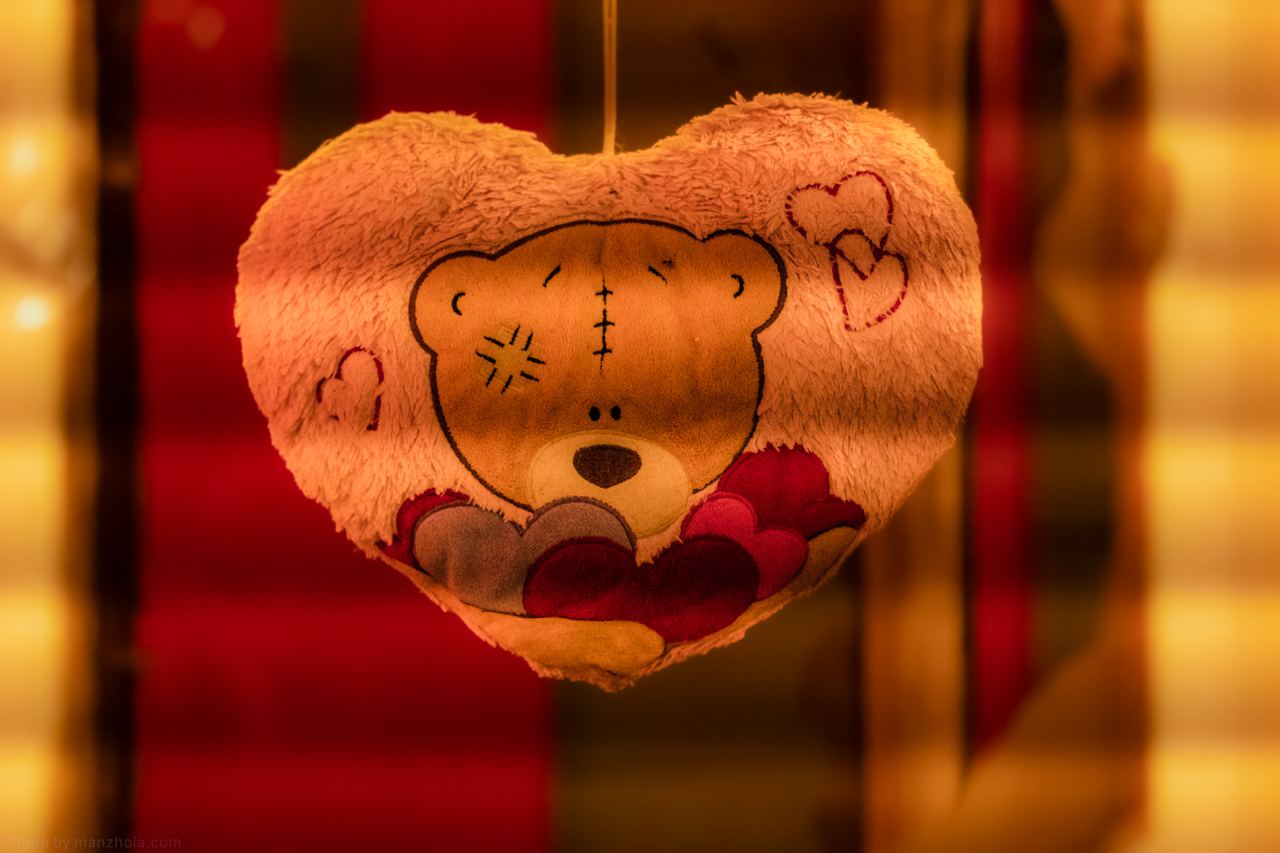
“They ask, ‘What if this were the door of our school?’ or, ‘Why was the house bombed?’.
In our installation, we often include children’s toys that were found under the rubble of houses and given to me by volunteers from Kharkiv. These elements highlight the theme of the lost childhood of Ukrainian children who have faced the war.”
Ruslan hopes to expand the doors installation to other cities across Canada, such as Vancouver, Halifax, and Fredericton. Internationally, he’d welcome the opportunity to exhibit in Latin American countries, “especially those maintaining ‘neutrality’ [that] are places where this work could generate meaningful dialogue.”
We think it would be awesome if some of the doors traveled to our sister branch of Postcards to the Front in Australia, or elsewhere in the world where postcard warriors stand with Ukraine.
At the exhibition in Etobicoke, Ontario, Ruslan met Tara Lesiuk, who introduced him to Annick Sheedy McLellan. “Together, they envisioned and co-directed the documentary film “Doors of War”. I am deeply grateful for their dedication to this project, their time and their vision that made this film possible.”
Anyone interested in hosting a screening of “Doors of War” can reach out directly via https://www.doorsofwarfilm.ca or email chat@gambadefilms.ca or production@doorsofwarfilm.ca.
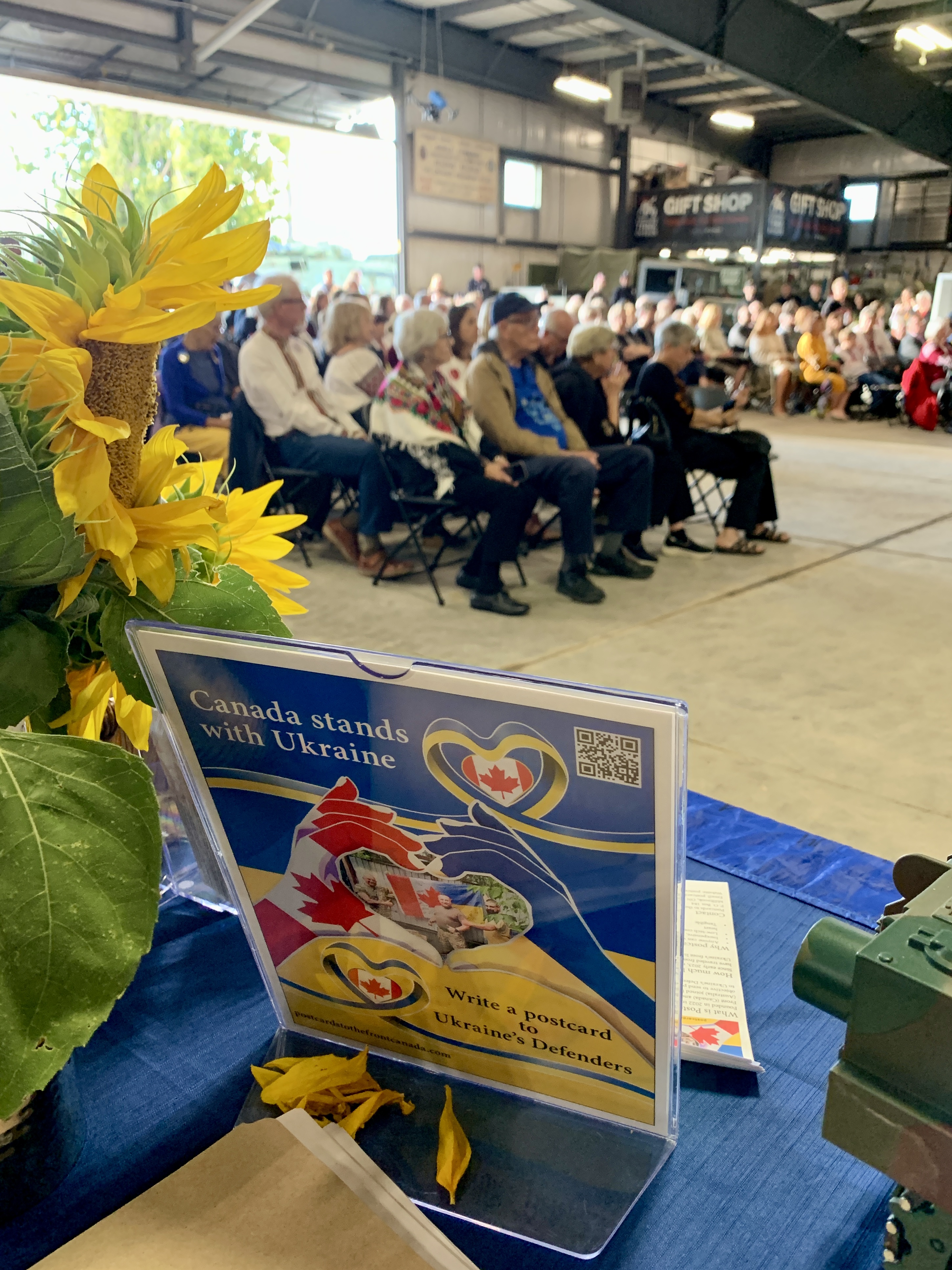
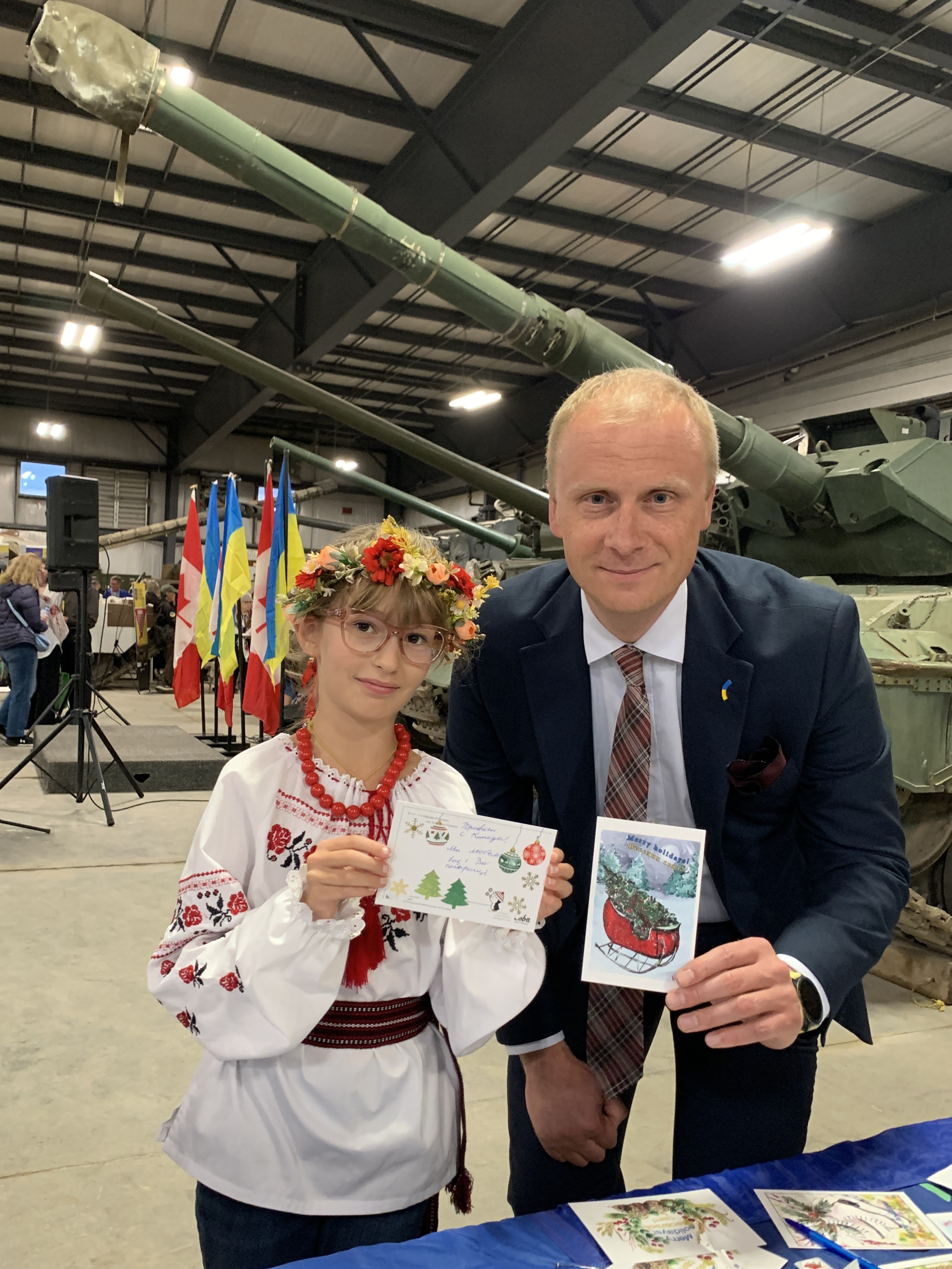
Ruslan’s late summer exhibition at the Canadian Tank Museum was a unique collaborative community project. Museum. Ukrainian culture: dancers, food, history. Art installation. De-mining education. Postcard-writing to Defenders of Ukraine. Military history. And tanks. Lots of tanks.
Did you know … The Canadian Tank Museum has the largest collection of functional historical military equipment – globally. That’s right! In Canada. And a whole lot of volunteers who maintain them and who drive them, from high-school age to old age.
When he learned that Postcards to the Front was going to collaborate with the museum for the exhibition, Ruslan told us, “I was truly moved… so many people, reaching out to encourage and honour those heroes risking everything for freedom. Every soldier must know they are not forgotten. Words of solidarity carry immense emotional weight for those on the frontlines.”


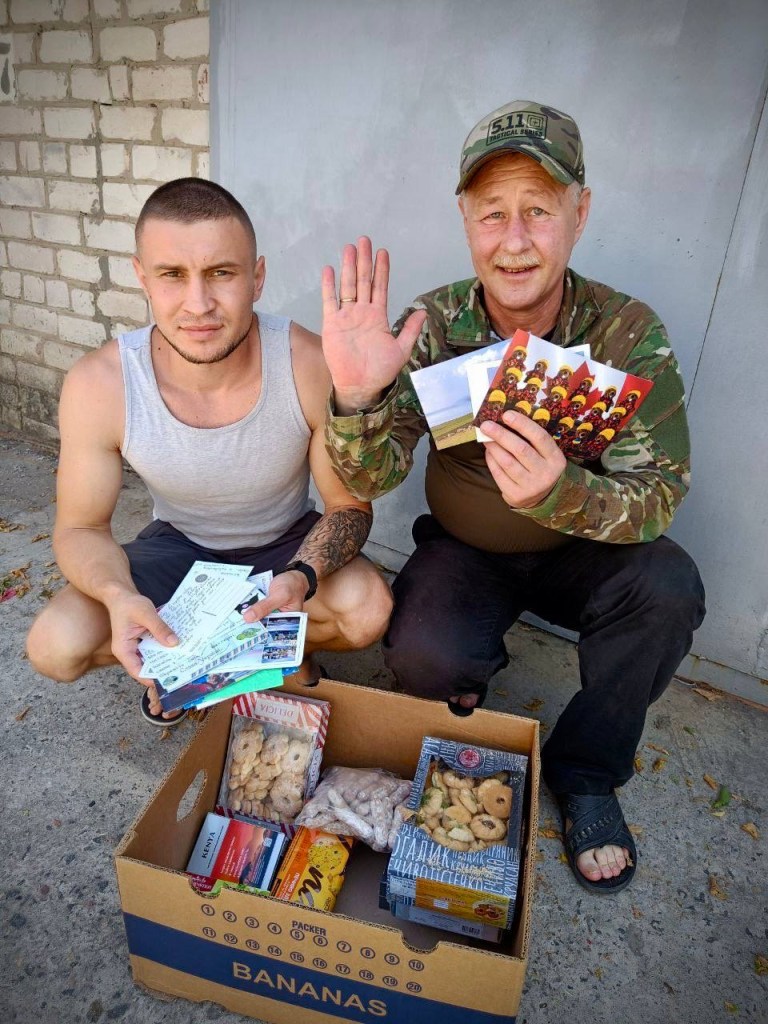
And when he learned that nearly 40,000 postcards have traveled from Canada and Australia branches of Postcards to the Front to the hands and hearts of Defenders, Ruslan observed “that tens of thousands of individuals who have taken the time to send their care across continents is deeply powerful. It reminds Ukraine’s Defenders of global solidarity.”
“I imagine [that the postcard messages are] an affirmation of what they are fighting for – freedom, family … they are seen, valued, and cherished.”
When he first saw photos of Defenders holding postcards that traveled from Canada, Australia and elsewhere, Ruslan found the images to be “deeply emotional.”
Ultimately, he said, “every message matters. Never underestimate the power of a few heartfelt words.”
Of his installation in the “Tridents and Tanks” exhibition at the Canadian Tank Museum, Ruslan imagined that a wide, diverse audience would visit: veterans, families, students, casual museum-goers. The postcards that were written to Defenders during the duration of the exhibition demonstrate that his instincts were spot on!
“My hope,” he said, “is that visitors leave [the exhibition] reminded of their privilege to live in peace, to plan futures, to raise children while also realizing that Ukraine fights not only for its independence, but for democracy and freedom everywhere. Russia is a threat to these values worldwide. Ukraine’s victory will be a triumph for all of civilization, but it depends on steadfast support and unity from all our partners.”
Finally, he added, a note to you, dear postcard warriors: “continue to support Ukraine in every way that you can. Each message, each donation, each voice matters.”
Contact Ruslan Kurt: contact@ruslankurt.com
 Postcards to the Front (Canada / Канада)
Leave a comment